In short
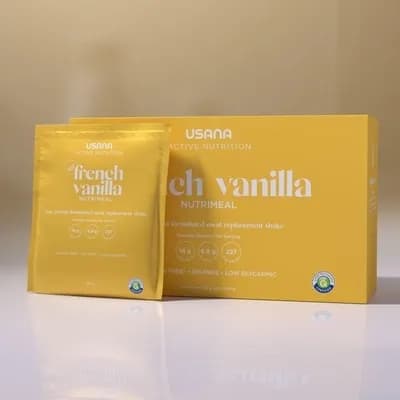
USANA Nutrimeal is a gluten-free†, low-glycaemic meal replacement shake. USANA's science resource says every Nutrimeal is packed with fibre and protein, makes it convenient to get balanced nutrition on the go, and helps control hunger. Each shake is 240 calories (230 for Nutrimeal Free).
You can watch the companion English video first: Skipping Meals? USANA Nutrimeal Explained.
Why a balanced meal replacement
The page says hectic mornings and busy days can make it tough to stick to your goal of eating better, and skipped meals aren't a recipe for feeling focused and energised. Nutrimeal is positioned as a convenient, better-for-you choice that fits into a balanced diet by providing the goodness of a healthful meal in a shake. It also notes that a healthy, whole-food diet is the best way to get the nutrition your body needs, and that Nutrimeal can suit people who want a boost of quality nutrition, including athletes and older adults.
The nutrition balance: fibre, protein, fats and low-glycaemic carbohydrates
According to the page, every serving delivers a carefully formulated ratio of fibre, protein, fats and low-glycaemic carbohydrates that can help satisfy hunger and support your daily well-being:
- Fibre: Nutrimeal is an excellent source of soluble and insoluble fibre. Soluble fibre dissolves in water and turns to gel during digestion, while insoluble fibre does not dissolve and adds bulk. The page says both types help food pass through the gastrointestinal system, not too fast and not too slow, supporting digestive health, and have been shown to help support cardiovascular health*. It adds that fibre slows digestion and fills up your stomach to keep you feeling fuller, longer.
- Protein: Protein is part of every cell, tissue and organ in your body and helps support healthy muscles, skin, hair, nails and cartilage. Because the body cannot store or make enough of the amino acids it needs, protein has to come from the diet, preferably spread equally throughout the day. Breakfast is usually the meal with the least protein, so a Nutrimeal shake is a good way to boost it in the morning.
- Beneficial fats: The page uses the sunflower oil in Nutrimeal as an example of beneficial fats, which help support the health of your cells and organs and are needed to create some of the energy you need.
- Low-glycaemic carbohydrates: These are digested more slowly, so your energy stays steady. The page contrasts them with the high-glycaemic carbohydrates in many refined foods, which are used up quickly. It explains that high-glycaemic foods cause a rapid rise in blood glucose followed by a rapid drop, while low-glycaemic foods like Nutrimeal digest more slowly and avoid such extreme highs and lows.
- Vitamins, minerals and potassium: Each shake also supplies many important vitamins and minerals, and the page calls Nutrimeal a good source of potassium, which your body needs for almost everything it does, including proper kidney and heart function, healthy muscle contraction and normal nerve transmission*.
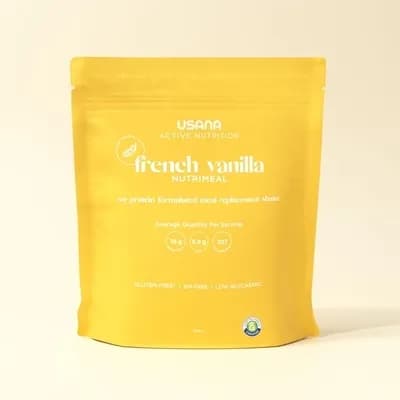
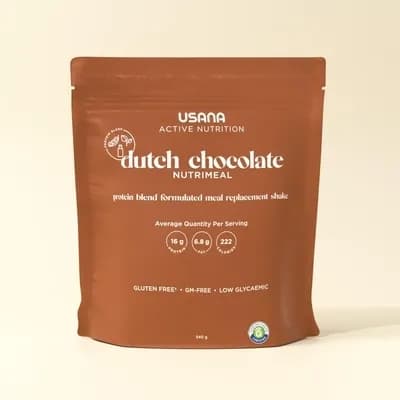
Three varieties: Dutch Chocolate, French Vanilla and Nutrimeal Free
The page lists three varieties with different protein sources and sweeteners:
| Dutch Chocolate | French Vanilla | Nutrimeal Free (mild vanilla flavour) | |
|---|---|---|---|
| Protein | 15 g soy, pea and whey protein | 15 g soy protein | 17 g plant-based pea and potato protein |
| Dietary fibre | 8 g | 8 g | 10 g |
| Gluten | Gluten free† | Gluten free† | Gluten free† |
| Other | Sweetened with fructose | Sweetened with fructose | Dairy free, soy free, sweetened with organic cane sugar |
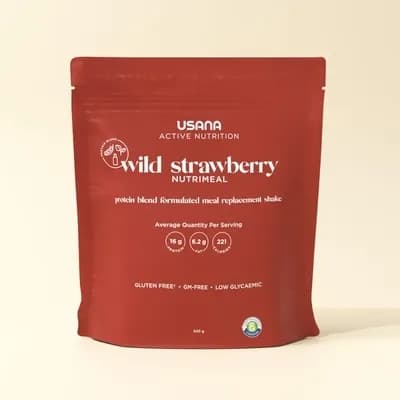
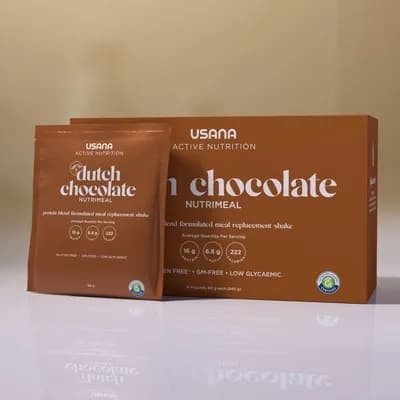
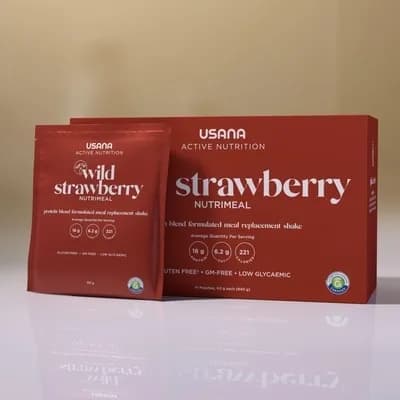
Each shake is 240 calories, and 230 for Nutrimeal Free. Availability of flavours and pack sizes differs by market; the USANA price list also lists Wild Strawberry and 28-pouch sets.
How to mix it
The page gives a basic method: combine three scoops with 10 to 12 ounces (about 300 to 350 millilitres) of cold water, then mix thoroughly in a blender or BlenderBottle for 45 seconds.
For a thicker shake, blend with ice. For more flavour variety, try blending with your favourite fruits, veggies, spices or extracts.
Good to know
- †For customers sensitive to gluten: no gluten-containing ingredients are used in this product, but Nutrimeal is produced in a facility that manufactures other foods that do contain gluten;
- Nutrimeal is produced on equipment that also processes peanuts, tree nuts, eggs, wheat, sesame and shellfish;
- Supplements and meal replacements do not replace a balanced diet and healthy lifestyle;
- If you are pregnant, nursing, taking a prescription drug or have a medical condition, consult your physician first;
- Packaging and nutrition data differ by region. This guide describes the U.S. formulation, so please check the label for your market.
Official resources
- 📄 USANA price list (member vs retail prices, free to download)
- 🛒 Order Nutrimeal (9 servings): Dutch Chocolate | French Vanilla | Wild Strawberry
- 🛒 Order the Nutrimeal pouch set (28 pouches): Dutch Chocolate | French Vanilla | Wild Strawberry
- 📖 Product pages: Dutch Chocolate | French Vanilla | Wild Strawberry | Pouches, Dutch Chocolate | Pouches, French Vanilla | Pouches, Wild Strawberry
This guide is based on USANA's science resource (Ask The Scientists). *These statements have not been evaluated by the Food and Drug Administration. This product is not intended to diagnose, treat, cure, or prevent any disease.