TL;DR
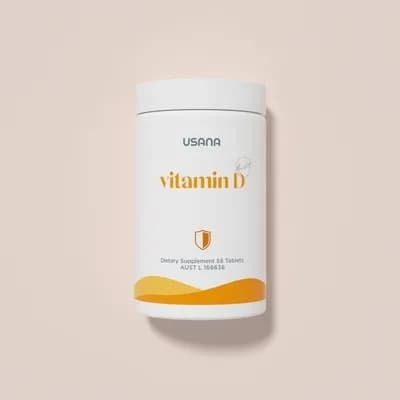
Sunshine feeds your soul, but getting enough vitamin D purely from the sun is surprisingly complicated in our modern everyday world. Latitude, seasonal changes, office hours, and daily sunscreen all block natural UVB rays, leaving nearly half of the worldwide population with insufficient levels. USANA Vitamin D provides bioavailable cholecalciferol (vitamin D3) to bridge this critical gap, supporting strong bones, healthy muscle function, and balanced immune defences.
Beyond bone health, modern cell biology reveals that vitamin D is actually a powerful prohormone that regulates hundreds of genes. Furthermore, optimal calcium metabolism requires a delicate partnership: while D3 draws calcium into the bloodstream, vitamin K2 ensures it is deposited safely into bones and kept out of blood vessels.
You can watch the complete English video guide here: USANA Vitamin D: The Sunshine Hormone, Bone Strength & Immune Support.
The Modern Sunshine Dilemma
Throughout human evolutionary history, our bodies relied on natural sunlight striking the skin to stimulate the internal production of vitamin D. Today, however, modern lifestyles have created a widespread state of "sun hunger."
Several everyday factors severely restrict our ability to produce vitamin D naturally:
- Indoor lifestyles: Working in enclosed offices, commuting in vehicles, and spending leisure time indoors prevent direct sunlight exposure.
- Sun protection: While sunscreen is essential for protecting the skin against photoageing and UV damage, a broad-spectrum SPF 30 sunscreen can reduce cutaneous vitamin D synthesis by more than 95%.
- Geographic latitude and seasons: During winter months in non-tropical regions, the angle of the sun causes ultraviolet rays to scatter across a longer atmospheric path, filtering out the UVB photons required for synthesis.
Understanding the "Shadow Rule"
Photobiologists and dermatologists often refer to a simple rule of thumb known as the shadow rule:
If your shadow is taller than you are, the sun is positioned too low in the sky for ultraviolet B (UVB) rays to penetrate the atmosphere effectively.
Only when the sun is high overhead—typically around midday, when your shadow is shorter than your height—can your skin synthesise vitamin D. Because few people can spend midday hours outdoors with unprotected skin, dietary and supplemental sources become essential.
More Than a Vitamin: A Powerful Prohormone
In traditional nutrition, vitamins are defined as organic trace compounds that function primarily as coenzymes or cofactors in biochemical reactions. Vitamin D is unique: it acts in the body as a prohormone.
After being absorbed or synthesised in the skin, vitamin D undergoes two essential enzymatic conversions:
- In the liver, it is converted into 25-hydroxyvitamin D [25(OH)D], commonly known as calcifediol. This is the primary circulating form measured in routine blood tests.
- In the kidneys and local peripheral tissues, it is converted into its biologically active hormonal form, 1,25-dihydroxyvitamin D [1,25(OH)2D], known as calcitriol.
Nuclear Vitamin D Receptors (VDR) are distributed throughout almost every major cell type in the human body, including brain neurons, cardiac muscle, the thyroid gland, skeletal muscle fibres, and virtually all immune cells (T cells, B cells, and macrophages). Upon binding, calcitriol interacts directly with cellular DNA, modulating the expression of 200 to 300 vital genes.
The Calcium Symphony: Why D3 Needs K2
One of vitamin D's most celebrated physiological roles is maintaining calcium homeostasis. Vitamin D3 stimulates the synthesis of calcium transport proteins in the intestinal lining, dramatically enhancing the efficiency of dietary calcium absorption from roughly 10–15% up to 30–40%.
However, getting calcium into the bloodstream is only the first movement of the symphony. Calcium requires intelligent molecular direction:
- The risk of unguided calcium: If absorbed calcium remains unbound in circulation, it can precipitate and deposit into soft tissues, heart valves, and arterial walls, contributing to vascular calcification and arterial stiffness.
- The role of Vitamin K2: Vitamin K2 acts as the molecular traffic controller for calcium. It activates two critical vitamin K-dependent proteins:
- Osteocalcin: Produced by bone-building osteoblast cells, osteocalcin must undergo carboxylation (activated by K2) to bind ionic calcium and integrate it securely into the mineral bone matrix.
- Matrix Gla Protein (MGP): Synthesised in vascular smooth muscle cells, MGP is the most potent known inhibitor of arterial soft-tissue calcification. Vitamin K2 activates MGP, preventing calcium from depositing along blood vessel walls.
By working together, vitamin D3 ensures calcium enters the bloodstream, while vitamin K2 ensures that calcium strengthens bones rather than stiffening arteries.
Regional Formulations & Pairing with CellSentials
Product formulations and regulatory standards vary across international markets to conform with local health agencies:
- United States Formula: Contains 2,000 IU (50 mcg) of vitamin D3 directly combined with active vitamin K2 (both animal-derived MK-4 and naturally fermented MK-7 subtypes).
- Australian Formula (Item 109): Provides high-potency, pure vitamin D3 (1,000 IU / 25 mcg cholecalciferol) per tablet.
To achieve complete D3 and K2 synergy in markets where vitamin D is formulated as a pure D3 supplement, we recommend pairing USANA Vitamin D with USANA CellSentials. CellSentials provides comprehensive micronutrition, including bioavailable vitamin K2, delivering an optimal foundation for bone density and cardiovascular wellness.
Usage Directions & Guidelines
- Directions (Australia): Adults take one (1) tablet daily, preferably with a meal containing healthy dietary fats (such as olive oil, avocado, or nuts) to maximise the absorption of this fat-soluble vitamin.
- Precautions: Keep out of reach of children. If you are pregnant, nursing, taking prescription medications (such as blood thinners or cardiac glycosides), or consuming more than 4,000 IU daily, consult your healthcare practitioner before use.
- General advice: Always read the label. Follow the directions for use. Dietary supplements should not replace a balanced diet.
Official Resources & Next Steps
- 📄 USANA price list — member vs retail prices, free to download
- 🛒 Order USANA Vitamin D online
- 📖 USANA Vitamin D product page
- 📖 USANA CellSentials Beginner Guide 2026
- 📖 Best Supplements for Immune Support
This educational article covers the Australian formula of USANA Vitamin D (item 109). It provides general nutrition information and shopping guidance, not medical advice.