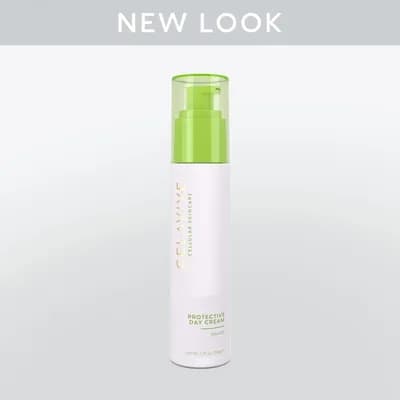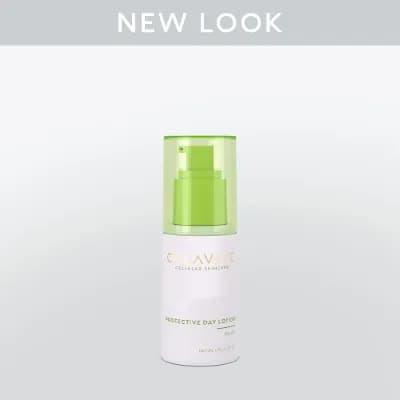
Protective Day Cream vs Day Lotion
Cleanser, toner, serum. Most people do all of it before they leave the house — and then skip the last step. Without it, the work done by the steps before it gets undone by the sun, a little at a time.
Celavive finishes the morning with two products: Protective Day Cream and Protective Day Lotion. Same SPF. Most of the same ingredients. They were not made for the same skin. This guide explains how to tell which of the two is yours.
You can also watch the English video overview: Cream or Lotion? Celavive Protective Day Cream vs Day Lotion Explained.
Two Kinds of Ultraviolet Light
There are two kinds of ultraviolet light that reach the skin, and they do different things.
- UVA ages the skin — it is associated with the visible signs of ageing, such as wrinkles and dark spots.
- UVB burns it.
Both are harmful. This matters because SPF measures only burning, which is UVB. The SPF number on its own says nothing about UVA. That is why the label also has to say broad spectrum — the phrase that tells you both kinds of light are being addressed.
Broad-spectrum protection is a daily habit, not a beach-day product. Cloudy days count. Days when you have no plans to be outside count. Use a broad spectrum SPF 15 or higher.
Why Four UV Filters
Both Celavive formulas use four UV filters rather than one:
| Filter | Main role |
|---|---|
| Avobenzone | Protects mainly against UVA |
| Octocrylene | Absorbs UVB — and stabilises avobenzone |
| Homosalate | Absorbs UVB |
| Octinoxate | Absorbs UVB |
Filters formulated together cover a broader spectrum of light and give more complete coverage on the skin. Octocrylene does one more job worth knowing about: it stabilises avobenzone, which degrades in light over time. Pairing them is what keeps the UVA side of the protection working through the day.
Dry Skin Is Not Dehydrated Skin
To choose between the two products, it helps to separate two things people tend to merge:
- Dry skin lacks oil. It tends to flake.
- Dehydrated skin lacks water. It feels tight.
Oily skin can be dehydrated too — and dehydrated skin can produce more oil, trying to correct itself. So most skin needs more water; not all skin needs more oil. That line is exactly where the two products split.
Protective Day Cream — Dry and Sensitive Skin
Protective Day Cream is the richer of the two. Alongside the shared moisture base it brings coconut-derived triglycerides and glycerin, plus an extract from a plant that grows in the salt marshes of South Korea, which boosts the skin's own hyaluronic acid.
It is made for dry, sensitive skin.
Protective Day Lotion — Oily and Combination Skin
Protective Day Lotion is the lightweight one. It moisturises just as well, without adding excess oil or grease.
It is made for oily, combination skin.
The Moisture Base They Share
Underneath the difference, both products are built on the same base.
- The Olivol Botanical Blend — olive, watermelon rind, apple, and lentil — gives skin a full 24 hours of plumping hydration. (That 24 hours refers to hydration, not to how long sun protection lasts.)
- Shea butter brings long-chain fatty acids that absorb quickly and help restore moisture.
- A soybean extract behaves like ceramide-3, a natural lipid in the skin's barrier. Ceramides make up as much as half the lipids in the outer layer.
- Three botanicals finish the formula: a ginseng complex from Korean, American and Siberian ginseng for antioxidant action and a firmer look; Eijitsu rose, which helps tighten and refines the appearance of pores; and sweet basil extract, an antioxidant that soothes skin after sun exposure.
How to Use It Properly
How much
- Cream: two to three pumps.
- Lotion: shake first, then a pearl-sized amount.
- Both go on the face and neck.
- In order: your serum goes under your sunscreen.
Three rules that matter
- Apply generously and evenly 15 minutes before sun exposure.
- Reapply at least every two hours.
- A higher SPF does not mean more time in the sun.
If you are swimming or sweating, use a water-resistant sunscreen.
The Short Answer
- Dry or sensitive skin → Protective Day Cream
- Oily or combination skin → Protective Day Lotion
The full morning is cleanse, tone, treat, protect. The first three look after how your skin is now. The last one looks after how it ages — and sunscreen does not work by one heavy day. It works by every day.
Sunscreen labelling differs by market. This guide uses the Australia and New Zealand labelling, Broad Spectrum SPF 15; the same formula is labelled differently in some other markets. Always follow the directions on the pack you buy. This article explains product selection and use only, and does not provide medical advice. Individual skin type and experience vary.