TL;DR
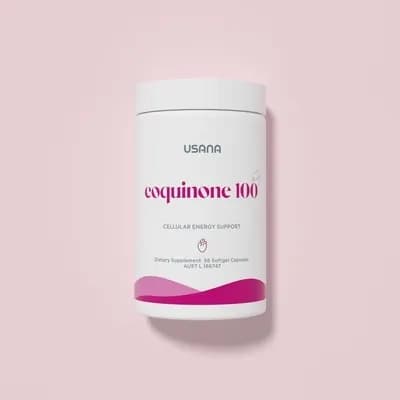
USANA CoQuinone 100 pairs 100 mg of coenzyme Q10 with 40 mg of alpha-lipoic acid per capsule, delivered in a lipid mixture of natural emulsifiers and medium-chain triglycerides for absorption. CoQ10 works on the electron transport chain where your cells make energy, your body produces less of it as you age, and alpha-lipoic acid supports the same mitochondrial machinery from a different angle.
Energy Starts in Your Cells
Your heart beats. Your brain sends signals. Your digestive system processes food. The energy behind all of it starts in your cells — and your cells need the right materials on hand to create it. With age, the body starts to slow down the production of those cellular resources.
What CoQ10 Does Inside the Cell
Coenzyme Q10 is found throughout your body. You might say it is ubiquitous, which is exactly where its other name comes from: ubiquinone. It concentrates in cellular membranes, in particular the membranes of your mitochondria — your cellular power plants.
Energy is generated when the chemical bonds of food molecules are broken apart, in a complex cycle that ends with a molecule your mitochondria can store and use: adenosine triphosphate, or ATP.
On the electron transport chain, CoQ10 works like a member of a relay team. Because it is fat soluble, it moves freely across the lipid bilayer of your cell membranes:
- it takes electrons from one group of proteins
- it carries them quickly across the lipid layer
- it delivers them to another group
Each of those transfers releases energy that can be stored and used as ATP.
Why It Declines With Age
When you are young, your body produces ample amounts of CoQ10. In most organs the amount peaks around age 20, then gradually declines. By the time you hit your eighties, your cells could have less than half of what they did in your twenties.
Age is not the only factor. CoQ10 may also be depleted by your overall nutritional status, including inadequate levels of the B vitamins, vitamin C, and selenium.
The Form, and Why It Absorbs
The CoQ10 in CoQuinone is a solubilized ubiquinone — formulated to dissolve. It is produced microbiologically in fermentation, and then purified. USANA's formulation has excellent absorption because it provides these antioxidants in a lipid mixture of natural emulsifiers and medium-chain triglycerides.
The Alpha-Lipoic Acid Pairing
Every capsule of CoQuinone 100 carries 100 mg of coenzyme Q10 and 40 mg of alpha-lipoic acid — the 100 in the name is that 100 mg of CoQ10.
Alpha-lipoic acid directly helps enzymes within the mitochondria convert glucose into energy. Together, the two nutrients provide more support for healthy mitochondrial function and energy production than CoQ10 alone.
The Antioxidant Network
Damaging free radicals are a byproduct of the electron transfers that happen during energy production. CoQ10 and alpha-lipoic acid can neutralize those free radicals, protecting mitochondrial structures and functions from damage.
CoQ10 rivals the antioxidant action of vitamins E and C, and helps regenerate and recycle vitamin E. It also protects low-density lipoprotein cholesterol (LDL) from oxidation, so it is less likely to become damaging to surrounding tissues.
Alpha-lipoic acid acts like a super antioxidant, fighting off free radicals both inside the cell and in the outer cell membrane. It aids the production of glutathione — one of your cells' own antioxidants — and helps your cells recycle CoQ10, so the network keeps running.
The Heart and the Hungriest Organs
Some cells are more energy-hungry than others. You will find the most CoQ10 in the organs with the highest energy needs: the kidneys, liver, pancreas, spleen, lungs, adrenal glands, brain, and muscles.
That includes your most important muscle — your heart. With every beat, your heart muscle uses energy to contract and relax as it pumps blood through your body. Several human clinical trials have shown CoQ10's effectiveness in helping to maintain good cardiovascular function.
How to Take It
Take one or two capsules daily, preferably with food. Each bottle contains 56 capsules. Keep out of reach of children, and consult your physician if you are pregnant, nursing, taking a prescription drug, or have a medical condition.
Watch the Video
Related Reading
If you want to review the official product details first, start here:
This article is educational only and does not provide medical advice. This product is not intended to diagnose, treat, cure or prevent any disease. Always read the label and follow the directions for use.