Introduction
A few weeks into keto, your weight and energy are heading the right way, yet one thing is not moving as smoothly: your bowels. Going days between bowel movements, or straining when you do, is one of the most common complaints on keto.
It does not mean keto is wrong for you. Most of the time it is a sign that your fibre has dropped and your water and salt have not kept up. This guide explains why keto constipation happens and gives you a complete gut-health plan.
Why It Happens: Fibre, Water and Gut Bacteria
1. Fibre drops sharply
Fibre is key to regularity. Insoluble fibre adds bulk and moves food through the gut; soluble fibre absorbs water to keep stools soft, and its prebiotic fibres also feed beneficial bacteria.
The main sources of fibre are exactly what keto restricts: whole grains, legumes, fruit and starchy vegetables. Change your plate, and fibre intake often falls steeply.
2. Water and salt loss
In early keto, insulin falls and the kidneys excrete more sodium, taking water with it. When you are low on fluid, the bowel pulls more water from its contents, leaving stools drier and harder.
3. Gut bacteria need time to adapt
Your gut bacteria live on what you eat. When your diet changes suddenly, they need time to find a new balance.
How Much Fibre You Need
Australia's National Health and Medical Research Council (NHMRC) sets an adequate fibre intake of 30 g a day for adult men and 25 g a day for adult women. USANA notes that most adults average only about 16 g a day, around half the recommendation, and on keto the gap is often wider.
The Plan
1. Eat low-carb, high-fibre foods
Keto does not have to mean giving up fibre. These foods are low in carbs and rich in fibre, so rotate them through your week:
- Leafy greens: spinach, kale, lettuce
- Cruciferous vegetables: broccoli, cauliflower, Brussels sprouts
- Avocado
- Seeds and nuts: chia seeds, flaxseeds, almonds
2. Drink enough water and add salt
Drink on a schedule and aim for pale yellow urine. Have a cup or two of broth or bone broth each day and salt your food. When fluids and electrolytes keep up, your gut moves more easily too. For the full electrolyte plan, see Keto Flu: How to Get Through It With Salt, Magnesium and Electrolytes.
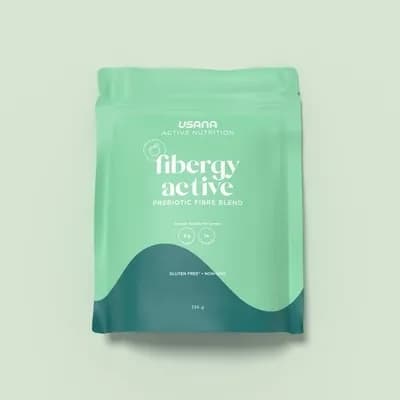
3. Top up fibre: USANA Fibergy Active
Reaching 25–30 g of fibre a day from vegetables and seeds alone is not easy. USANA Fibergy Active is a low-glycaemic, vegan fibre supplement made from fructooligosaccharides, organic agave inulin, sugarcane fibre and other fibres, combining soluble and insoluble fibre.
On the US label, one serving (one rounded tablespoon, 12 g) has 11 g carbohydrate, of which 9 g is fibre, and 0 g sugar, leaving only about 2 g of net carbs. One serving covers roughly a third of the daily recommendation while barely touching your carb budget. USANA says it helps support regularity and digestive comfort, and provides prebiotic fibre to feed beneficial gut bacteria.
USANA partnered with the Ragle Human Nutrition Research Center at the University of California, Davis on a randomised, double-blind, placebo-controlled crossover study: 20 healthy adults with low fibre intake took 12 g a day, and bifidobacteria in the gut increased, along with higher plasma levels of indole-3-propionic acid, a metabolite produced by gut microbes.
How to take it: add one rounded tablespoon to water or another drink, and take it with plenty of liquid. As the label directs, if you take medication, take Fibergy Active at least two hours before or after it. Learn more: USANA Fibergy Active guide.
🎬 Watch the video: Are You Getting Enough Fiber? USANA Fibergy Active Explained
4. Balance your gut bacteria: USANA Probiotic
Fibre feeds beneficial bacteria; a probiotic adds them directly. The two work hand in hand.
USANA Probiotic combines two of the most researched strains, Bifidobacterium BB-12 and Lactobacillus rhamnosus LGG, in a 50:50 blend, with 12 billion CFU guaranteed at manufacture and room-temperature stability. On the Australia/New Zealand label, each stick has under 1 g carbohydrate and 0 g sugar. USANA lists its benefits as promoting good digestion and nutrient absorption, maintaining digestive comfort and regularity, and supporting healthy immunity. Adults take one stick every other day, or as needed, straight from the pack or mixed into a cold food or drink. Learn more: USANA Probiotic Explained.
🎬 Watch the video: USANA Probiotic Explained: BB-12, LGG and 12 Billion CFU
5. Increase fibre gradually
Adding a lot of fibre at once can leave some people bloated. Start with half a serving of Fibergy Active and build up to a full serving over a week, drinking more water as you go.
Your Keto Gut-Health Plan
| Need | What to do / USANA product | How |
|---|---|---|
| Food fibre | Leafy greens, cruciferous vegetables, avocado, chia, flax | Vegetables at every meal |
| Water and salt | Drink on a schedule; broth, bone broth | Aim for pale yellow urine |
| Fibre | Fibergy Active | One rounded tablespoon daily with plenty of liquid |
| Gut bacteria | Probiotic | One stick every other day, or as needed |
Starter plan: low-carb, high-fibre foods + water and salt + Fibergy Active, to close the fibre and fluid gap first.
Complete plan: add Probiotic, so fibre and probiotics work together to keep your gut balanced and regular on keto.
Formulas, directions and availability differ by country; always follow the label on your product.
Why USANA
- Pharmaceutical-grade manufacturing. USANA manufactures its supplements to pharmaceutical-grade standards, testing every batch for purity, identity, composition, potency and safety.
- Research-led. Fibergy Active was studied in humans with the University of California, Davis; Probiotic uses the well-researched BB-12 and LGG strains with a guaranteed live count at manufacture.
- More than 30 years of science. USANA was founded by a scientist in 1992, has more than 150 scientists and is listed on the New York Stock Exchange.
Learn more: The USANA Difference.
What to Read Next
- The complete keto supplement plan → Keto Supplements: What to Take on a Ketogenic Diet
- Electrolytes in early keto → Keto Flu
- Fibre blend and research → USANA Fibergy Active guide
- Strains and live counts → USANA Probiotic Explained
- 📄 USANA prices in your country, member vs retail: Price list
Important Notice
This article is general information about dietary supplements, written by an independent USANA Brand Partner. It is not medical or nutritional advice. If constipation persists, or comes with abdominal pain, blood in the stool or unexplained weight loss, see a doctor promptly. If you take medication, have a bowel condition, or are pregnant or breastfeeding, talk to your doctor before taking supplements. Product formulas, directions and availability differ by country; always read the label on your product and use as directed. These statements have not been evaluated by the Food and Drug Administration, and USANA products are not intended to diagnose, treat, cure or prevent any disease.